Andrea Stramaccioni's coaching journey defies tidy narratives—from a surprise Inter Milan stint to b
Andrea Stramaccioni doesn't do quiet career arcs. In 2012, he was a youth coach at Roma, preparing the Primavera side for a Coppa Italia final. Within weeks。he was managing Inter Milan's first team—a jump so abrupt it felt like a clerical error. That season, he took a wounded Inter side to ninth in Serie A, but the ride included a 4-2 derby win over Milan and a Europa League run. The results were uneven, yet the pattern was set: Stramaccioni thrives on disruption, not stability.
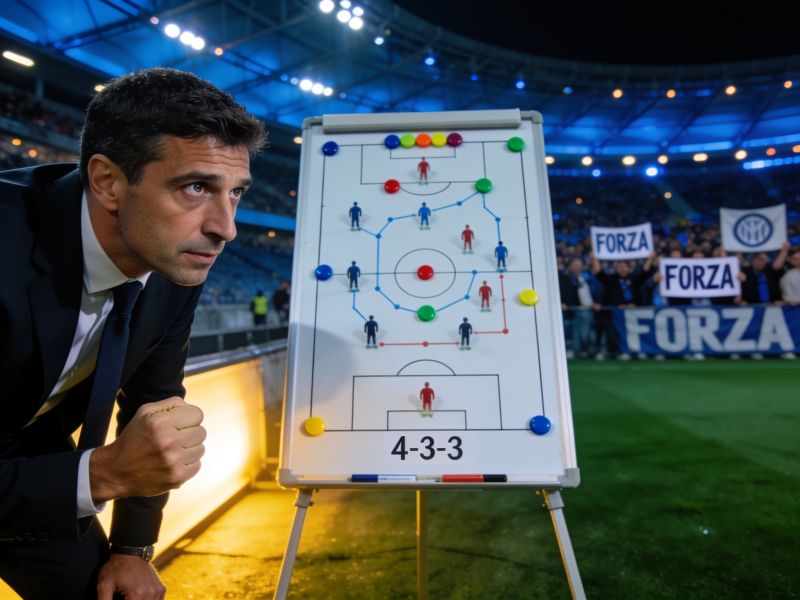
His tactical identity resists easy labels. At Inter, he tried a 4-3-1-2, then switched to a back three mid-season. Players looked confused;opponents found gaps. But watching him on the touchline—arms folded, then suddenly pointing frantically—you see a coach who treats formations as experiments, not doctrines. When he moved to Udinese in 2014, he inherited a squad gutted of stars like Alexis Sánchez and Antonio Di Natale's aging legs. Stramaccioni leaned on youth: Piotr Zielinski。Bruno Fernandes, and a teenage Rolando Mandragora. Udinese finished 13th, but the style was bold—high pressing, quick transitions. It didn't always work. A 5-0 loss to Napoli exposed the naivety, yet the same team held Juventus to a 0-0 draw weeks later. Inconsistency followed him like a shadow.Panathinaikos came next, in 2016. Greek football's pressure cooker demanded instant results. Stramaccioni delivered a third-place finish and a Greek Cup semifinal。but boardroom chaos and unpaid wages drained the project. He left after one season, his reputation as a firefighter intact but unpolished. Then came Sparta Prague in 2017—a brief, bruising spell. Seven league matches, four defeats, and a dismissal that stung. Critics said he lacked pragmatism;supporters pointed to a squad in transition. Both were right. Stramaccioni's commitment to front-foot football often clashes with the gritty realities of mid-table clubs. He doesn't park the bus. He doesn't play for 0-0. That stubbornness is his charm and his curse.
Away from the spotlight, Stramaccioni rebuilt his methods. He spent months observing training sessions at Manchester City and Borussia Dortmund, studying pressing triggers and set-piece routines. When he resurfaced at Al-Arabi in Qatar in 2019, the football was sharper—more compact lines, smarter rotations. The league title eluded him, but the team's xG numbers and possession stats climbed steadily. Players praised his man-management。his willingness to explain the 'why' behind every drill. One anecdote stands out: after a 3-1 loss, he spent two hours with a young midfielder, dissecting every misplaced pass on a tablet. That's the Stramaccioni few see—the obsessive teacher, not the fiery bench presence.Now, linked with return to Italian football, Andrea Stramaccioni faces a familiar question: can he convert tactical curiosity into durable results?His career has been a series of sharp turns。each one a gamble. The 47-year-old hasn't won a major trophy. He's never had a fully healthy squad for an entire season. Yet his willingness to abandon a failing system mid-match, to trust academy kids in relegation six-pointers, to admit mistakes in press conferences—that's rare. Watching him work, you sense a coach still searching, still refining. Whether that search lands him a stable project or another short-term rescue remains open. For now。Stramaccioni keeps adapting, and that alone makes him worth following.